


Choosing the Right Drilling Rig
Dec. 08, 2025
A drilling rig is a piece of construction equipment used to drill holes into the earth’s surface. These rigs vary greatly in size, ranging from massive structures to units light enough to be moved by a single person.
Drilling rigs can collect samples from mineral deposits and test the physical properties of rock, soil, and groundwater. They are also used for underground installations such as tunnels, shafts, and pipelines.
How to Choose a Drilling Rig?
A drilling rig may be required for many different applications, such as drilling a well to access natural resources (water, oil, geothermal energy, etc.), constructing foundations, creating blast holes in mining, or collecting ground samples.
First, it’s important to clearly define the purpose of the drilling rig and the type of terrain it will mainly operate on. Based on ground conditions, you can choose among different types of drilling rigs, including rotary rigs, percussion rigs, down-the-hole (DTH) rigs, and top hammer drilling rigs.
To make the right choice, you should also consider whether the drilling rig will be used as part of your core operations or only for occasional tasks. Additionally, decide whether you prefer to invest in the latest technology or choose a machine with a long, proven track record.
Safety, reliability, and ease of operation are key factors and are closely connected. A reliable and user-friendly machine, when operated according to the manufacturer’s guidelines, helps ensure a higher level of safety.
You should also determine the level of mobility required. Options include self-propelled crawler drilling rigs and truck-mounted or trailer-mounted rigs, which are typically powered by a generator or the carrying vehicle.
Once the appropriate type of rig is selected, you can determine the required size based on the desired drilling diameter and depth.
When Is Drilling Necessary?
Drilling is required for many types of work, including:
Well drilling: for accessing groundwater or oil resources.
Geothermal drilling: to reach and extract heat from the earth.
Pile drilling: used to support buildings on unstable ground, with diameters up to 2,000 mm and depths reaching 70 meters.
Micropile drilling: mainly used to reinforce existing structures, typically ranging from 150 to 200 mm in diameter and up to 30 meters deep.
Blast hole drilling: commonly carried out in quarries.
Continuous flight auger drilling: where the borehole walls are supported by drill cuttings moved upward by the auger.
Drilling is most commonly performed vertically, but it can also be carried out horizontally or directionally, such as for installing anchors.
What Drilling Technology Should You Choose?
| Drilling Type | Soil Type | Comments |
|---|---|---|
| Rotary drilling | Soft rock | Allows for significant depths up to 5,000 meters; suitable for inclined or horizontal drilling |
| Down-the-hole drilling | Hard and fractured rock (limestone, granite, etc.) | Capable of reaching depths of up to 4,000 meters |
| Top hammer drilling | Consolidated ground | Small diameter (maximum 150 mm), shallow depth; suitable for inclined drilling |
| Auger drilling | Clay, clayey sand, gravel | Suitable for depths of several dozen meters |
| Core drilling | All soil types | Used for soil analysis; suitable for inclined drilling |
| Percussion drilling | Hard rock (sandstone, limestone, shale) | Depth up to 100 meters |
| Pipe jacking | Clay, clayey sand, gravel | Used for installing horizontal or vertical pipes |
Rotary drilling
This drilling method creates a borehole by grinding rock using a tool under combined weight and rotation. It is mainly applied in oil production. Drill cuttings are carried to the surface by drilling fluid injected through the drill string. The drilling fluid also stabilizes the borehole walls, eliminating the need for casing during drilling.
Down-the-hole drilling (rotary percussion or rotary hammer drilling)
This method uses a rotating drill bit along with a pneumatic hammer that strikes the bottom of the hole. The excavated material is pushed to the surface by compressed air powering the hammer. These rigs deliver high drilling speeds and strong performance, especially in rock. For artesian wells or geothermal drilling, air injected at the end of the drill pipe forces water upward, allowing immediate evaluation of water flow. This technique is suitable for hard and fractured ground at depths of up to 4,000 meters. When an eccentric bit is used, casing advancement can be applied to reinforce the borehole as drilling progresses.
Top hammer drilling
Top hammer drilling also relies on percussion, but the hammer operates outside the borehole. It is mainly used for small-diameter drilling, such as mineral exploration or installing rock anchors. This method is best suited for shallow holes, as ground conditions may cause deviation at greater depths. These rigs can operate in multiple drilling directions.
Auger boring
Auger boring is a form of rotary drilling that uses a helical screw, known as an auger. It is mainly applied in unconsolidated soils such as clay or sand. The excavated material is transported directly to the surface by the auger. For deeper holes, the auger must be periodically lifted to remove accumulated material.
Core drilling
Core drilling follows the same principle as rotary drilling but uses a specialized crown to extract a cylindrical soil or rock sample, known as a core, from inside the borehole.
Percussion drilling
Percussion drilling breaks rock by repeatedly dropping a drill bit under gravity. This method can only be used for vertical drilling. To prevent borehole collapse, casing must be installed as drilling proceeds. When cuttings interfere with drilling, the drill bit is replaced with a flap valve bailer, a tube with a hinged flap that collects debris and lifts it to the surface.
Pipe jacking
Pipe jacking is mainly used for installing horizontal pipes. Pipes are gradually pushed forward using percussion, while excavated material is removed at the end of the operation either by water flushing or with an auger. This technique is often chosen to minimize ground vibration or to avoid open trench excavation near existing structures.
Which type of drilling rig should you choose?
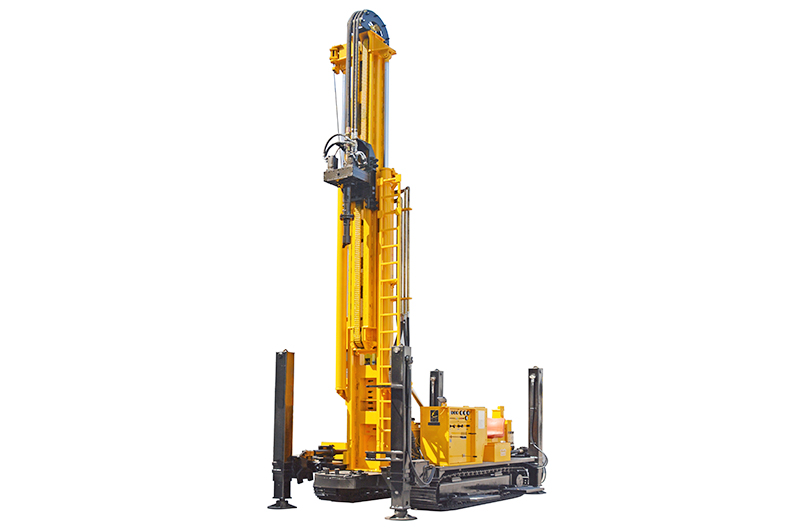
Drilling rigs generally fall into two main categories: autonomous crawler rigs and truck- or trailer-mounted rigs.
A crawler rig is the preferred option when the machine needs to move slowly over uneven terrain or very loose ground. Its stability depends on the surface area of its tracks—the wider the tracks, the greater the stability. However, wider tracks tend to wear faster and can damage the ground more during movement, especially when turning. Crawler drilling rigs typically have a travel speed of around 4 km/h, making them better suited to jobs that involve limited relocation.
Truck- or trailer-mounted drilling rigs are not self-propelled and rely on a transport vehicle or an external generator for power. While they lack autonomous mobility, they are significantly more cost-effective than crawler drilling rigs.
156
0
0
All Comments (0)
Previous: None
Next: PE Jaw Crusher vs. PEX Jaw Crusher: Which is Right for You?
If you are interested in sending in a Guest Blogger Submission,welcome to write for us!

Comments