


What are FRP Fans?
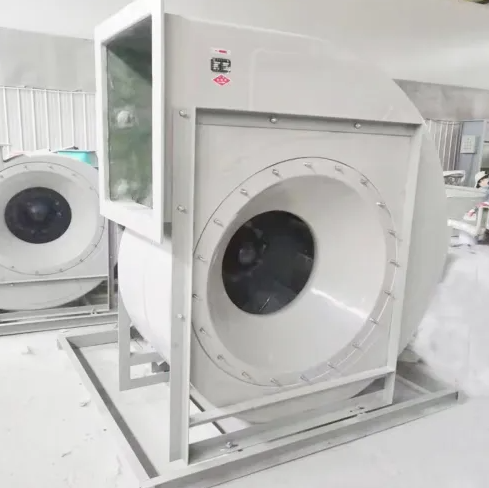
FRP stands for Fiberglass Reinforced Plastic, and FRP fans are specifically engineered for corrosive air movement applications. Depending on the model, these fans may feature a backward-curved wheel and a precisely controlled lamination structure to meet strict industry standards. To enhance spark resistance, additional layers of graphite impregnation and corrosion-resistant fabric are often incorporated into the design.
Markets for FRP Fans
FRP fans are widely used across various industries, with semiconductor manufacturing being a key market. This industry relies on a range of corrosive and toxic substances during the fabrication process. For instance, before chip assembly, acids are used to clean metals, and throughout production, corrosive gases and chemicals—such as phosphoric acid, ammonia, hydrofluoric acid, and hydrochloric acid—are commonly employed.
To ensure safe and efficient operations, continuous system performance is essential. However, this creates potential health risks for workers if proper ventilation is not in place. FRP fans play a crucial role here by delivering the high level of chemical-resistant ventilation required to maintain a safe work environment. Without adequate exhaust systems, employees could be exposed to harmful airborne contaminants.
FRP fans are valued not only for their corrosion resistance but also for their durability and low maintenance requirements. They provide long-term, reliable service with minimal downtime, helping facilities maintain both productivity and worker safety.
Additional Industries Using FRP Fans
In addition to semiconductor manufacturing, FRP fans are highly effective in a wide range of industries where corrosive environments or chemical exposure are common. These include:
Chemical Processing
Cleanrooms
Fertilizer Production
Fiber Optics Manufacturing
Metal and Metal Finishing
Mining Operations
Pharmaceutical Manufacturing
Industrial Plants and Facilities
These industries benefit from the corrosion resistance, durability, and low maintenance of FRP fans, making them a reliable choice for critical ventilation needs.
Keep in mind that FRP fans are specifically engineered for corrosion resistance. To achieve this, all steel components are fully enclosed, ensuring no metal parts are exposed to corrosive air. The resin used in construction is specially formulated to withstand a wide range of aggressive chemicals. Additionally, a UV-resistant top coat is applied to all exterior surfaces, providing long-term protection against sun damage and environmental degradation. For extremely harsh environments, FRP fans can also be manufactured with additional synthetic cloth layering, further enhancing durability and chemical resistance.
401
0
0
All Comments (0)
Previous: Warum sollte ich ein senkrechtes Förderband für meine Produktion wählen?
Next: Как да изберем правилната Конвейерна лента, за да избегнем загуби в бизнеса?
If you are interested in sending in a Guest Blogger Submission,welcome to write for us!

Comments