


Understanding High-Frequency Induction Heaters: What Engineers Really Want to Know
Nov. 19, 2025
1 What Frequency Range Counts as High Frequency for Induction Heating and Why It Matters
People often wonder what qualifies as high frequency in induction heating systems. In general, high frequency usually refers to tens of kilohertz up to several hundred kilohertz. This matters because the frequency determines how energy interacts with the metal being heated. Higher frequency creates a more concentrated current on the surface of the metal, which results in fast, localized heating. Lower frequencies can penetrate deeper. Choosing the correct frequency is essential because it influences efficiency, heating speed, and the suitability of the system for specific applications.
2 How Does Operating at High Frequency Affect Heating Depth in Metals
Another common question focuses on how high frequency changes the heating depth, which relates to the skin effect. As frequency increases, induced currents flow closer to the surface of the metal. This shallow penetration is ideal for surface hardening, brazing, or heating small components quickly. However, when working with thicker materials, very high frequency may not deliver enough heat deep inside the part. Understanding the relationship between frequency and penetration depth is crucial for selecting the right heater for each task.
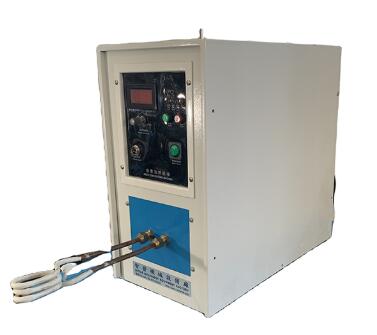
3 What Are the Challenges When Building or Driving a DIY High Frequency Induction Heater
Many enthusiasts attempt to build their own induction heaters and soon realize that high frequency creates unique challenges. A major difficulty is designing a stable resonant circuit using components that can handle rapid switching and high currents. If the resonant frequency is too high for the selected MOSFETs, capacitors, or coils, the system can overheat or fail. Coil design, capacitor rating, magnetic coupling, and proper cooling become critical factors. Achieving stable oscillation and preventing component stress can be complex, which is why even small design mistakes can lead to instability or damage.
4 How Safe Is It to Run a High Frequency Induction Heater
Safety is one of the biggest concerns when working with high frequency induction systems. These heaters generate rapidly changing magnetic fields and high currents, so using incorrectly rated components can cause overheating or electrical failure. Stability in the resonant circuit is important because unexpected load changes or detuned frequencies can cause voltage spikes. High frequency equipment can also generate electromagnetic interference if not properly managed. Good wiring layout, adequate insulation, proper filtering, cooling systems, and reliable components all contribute to safe operation.
Further reading:How to Choose the Right Underwater Thruster Manufacturer?
5 What Practical Industrial Applications Benefit Most from High Frequency Induction Heating
High frequency induction heating is popular in industries that require fast, controlled surface heating. Typical applications include surface hardening of gears and shafts, precision brazing, welding of small components, and heat-treating tasks that need quick temperature rise. Very high frequencies are used in micro-component heating, jewelry manufacturing, and other specialized applications where shallow, localized heating is essential. Because the energy is applied only where it is needed, these systems offer excellent efficiency and repeatability.
Final Thoughts
High frequency induction heaters combine speed, precision, and efficiency, making them ideal for both industrial users and advanced hobbyists. Understanding the role of frequency, heating depth, design challenges, safety requirements, and real-world applications helps ensure optimal performance and long-term reliability. Whether you are selecting a commercial system or developing your own design, these key questions form the foundation for making informed decisions about high frequency induction heating.
204
0
0
All Comments (0)
Previous: Как выбрать идеальную систему загрузки SMT для своих плат?
Next: How to Choose the Right Underwater Thruster Manufacturer?
If you are interested in sending in a Guest Blogger Submission,welcome to write for us!

Comments