

Tabletop Laser Marking Machine: A Complete Guide for Modern Manufacturing and Small Workshops
Mar. 12, 2026
What Is a Tabletop Laser Marking Machine
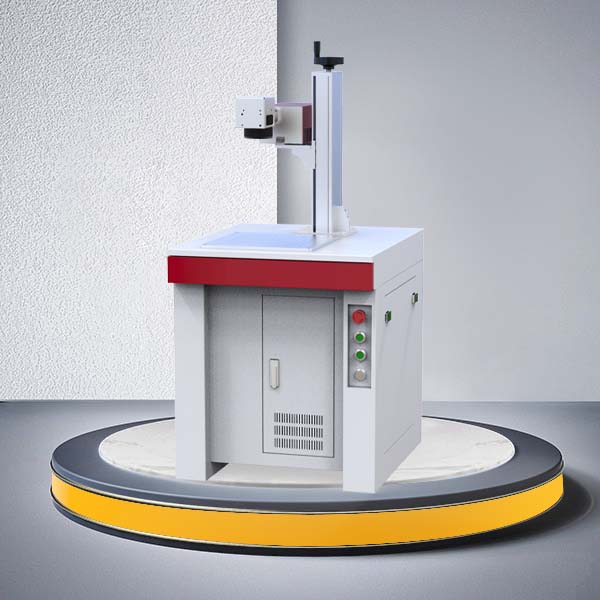
A tabletop laser marking machine is a compact industrial device designed to engrave or mark permanent information on materials using a concentrated laser beam. Unlike large industrial systems that occupy entire production floors, tabletop models are engineered to fit comfortably on a workbench or workstation. These machines deliver industrial-level precision while maintaining a smaller footprint, making them ideal for small factories, research labs, workshops, and even specialized customization businesses.
The core concept behind laser marking is surprisingly simple: a high-energy beam of light interacts with the surface of a material, altering its appearance through processes such as engraving, annealing, carbonizing, or foaming. The result is a permanent mark that does not fade, peel, or wear off easily. This makes the technology particularly useful for serial numbers, barcodes, logos, QR codes, and traceability labels.
One of the biggest advantages of tabletop laser markers is flexibility. Operators can mark metals like stainless steel, aluminum, and titanium as well as non-metal materials such as plastics, ceramics, wood, glass, and leather. Because the system is computer-controlled, complex graphics and extremely small text can be engraved with micron-level accuracy.
Think of a tabletop laser marker as the “precision pen” of modern manufacturing. Instead of ink, it uses photons. Instead of paper, it writes on industrial materials. The technology bridges the gap between large-scale industrial equipment and small-scale production needs, enabling businesses of all sizes to incorporate permanent marking into their workflow.
How Laser Marking Technology Works
At its core, laser marking technology relies on a focused beam of high-energy light that interacts with the surface of a material. When the laser beam strikes the surface, it generates localized heat. This heat triggers microscopic changes in the material’s structure, resulting in visible marks without requiring physical contact or cutting tools.
There are several marking processes commonly used in tabletop laser systems. Laser engraving removes material from the surface to create a deeper mark. Laser annealing changes the color of metal surfaces without removing material, producing high-contrast markings. Carbonization darkens organic materials such as wood or leather, while foaming creates raised marks on plastics. Each process is selected based on the material and the desired marking effect.
The precision of this process is extraordinary. Modern laser marking machines can achieve marking accuracy of around 0.01 millimeters, enabling manufacturers to produce extremely small but readable characters. This level of precision is essential in industries like electronics and medical devices where components often carry microscopic identification codes.
Another remarkable aspect of laser marking technology is its speed. Once the design is loaded into the control software, the machine can mark hundreds or even thousands of components per hour depending on the complexity of the design. Because there are no consumables such as ink or chemicals, operational costs remain relatively low.
From a broader perspective, laser marking represents a shift toward digital manufacturing. Designs are created digitally, processed by software, and executed with high-precision laser hardware. The combination of automation, speed, and accuracy explains why this technology is becoming a standard feature in modern manufacturing environments.
The Rising Demand for Laser Marking Equipment
Global Market Growth and Industry Statistics
The global laser marking machine market has experienced significant growth over the past decade, driven by increasing demand for product traceability, customization, and high-precision manufacturing. According to recent industry reports, the market reached approximately USD 3.4 billion in 2024 and continues to expand rapidly as industries adopt advanced laser technologies.
Some forecasts suggest even stronger growth ahead. Market research indicates that the laser marking industry could reach over USD 7.8 billion by 2034, with a compound annual growth rate of around 8%. Other long-term projections estimate the sector may surpass USD 40 billion by 2035, highlighting the increasing reliance on precision marking technologies across manufacturing industries.
Several factors are fueling this expansion. The first is the global push toward traceability and quality control. Manufacturers are required to mark parts with serial numbers, barcodes, or QR codes to track products throughout their lifecycle. This requirement is especially strict in sectors such as aerospace, automotive, and medical devices.
Another factor is the rise of Industry 4.0 and smart manufacturing. Automated production lines rely heavily on machine-readable identification systems. Laser marking machines integrate seamlessly with digital manufacturing systems, allowing companies to mark parts automatically during production.
Fiber laser technology also plays a significant role in market growth. Fiber lasers account for more than 50% of laser marking machine units globally, thanks to their efficiency, durability, and low maintenance requirements.
The data clearly indicates that laser marking technology is no longer a niche tool. Instead, it has become an essential component of modern industrial production, and tabletop machines are helping bring this capability to smaller businesses.
Why Compact Desktop Machines Are Gaining Popularity
While large industrial laser systems remain common in factories, tabletop laser marking machines have gained popularity for a number of practical reasons. First and foremost, they offer industrial performance in a compact form factor. Businesses no longer need a large manufacturing facility to perform high-quality laser engraving or marking.
Cost is another major factor. Traditional industrial laser systems can be expensive and require dedicated installation space. Desktop models provide a more accessible entry point for startups, small manufacturers, and customization businesses. For entrepreneurs offering personalized products such as engraved jewelry or branded accessories, tabletop laser machines are often the perfect solution.
Ease of use has also improved dramatically. Modern systems include intuitive software interfaces, automated focusing systems, and plug-and-play connectivity. Even users with limited technical experience can learn to operate the machine within a short time.
Flexibility is perhaps the most compelling advantage. A tabletop laser marker can be used for multiple applications—from engraving logos on metal tools to marking QR codes on plastic components. This versatility makes the machine valuable for both industrial and creative industries.
In many ways, tabletop laser markers represent the democratization of laser technology. What once required large factories and significant investment is now accessible to small businesses, laboratories, and even advanced hobbyists.
Key Components of a Tabletop Laser Marking Machine
Laser Source and Optical System
The laser source is the heart of any tabletop laser marking machine. It generates the beam of light used to mark materials. Depending on the type of machine, the laser source may be a fiber laser, CO₂ laser, or ultraviolet laser. Each type offers unique advantages for different materials and applications.
Fiber lasers are the most common choice for metal marking. They produce a highly concentrated beam that delivers excellent precision and efficiency. These lasers also consume 20–25% less power than traditional CO₂ systems, making them more energy-efficient.
The optical system works alongside the laser source to guide and focus the beam. This system typically includes mirrors, lenses, and a galvanometer scanning system that directs the beam across the marking area. The galvanometer scanners move extremely fast, allowing the machine to mark complex designs within seconds.
Another important component is the focusing lens, which determines the spot size of the laser beam. A smaller spot size allows for finer details and sharper marks. This is particularly important for applications such as micro-electronics or medical instruments.
Together, the laser source and optical system form the core of the machine’s marking capability. The quality of these components directly influences marking speed, accuracy, and durability.
Control Software and Motion System
While the laser hardware performs the physical marking process, the control software acts as the brain of the system. This software converts digital designs into instructions that guide the laser beam across the material surface.
Most tabletop laser marking machines support common graphic file formats such as DXF, PLT, BMP, and AI. Users can import logos, text, barcodes, or QR codes and adjust parameters such as marking speed, laser power, and frequency. Advanced software also supports automated serial number generation and batch marking.
The motion system plays an important role in positioning the workpiece. Some machines use fixed worktables, while others include motorized stages that allow the material to move during marking. This feature is particularly useful when marking larger objects.
Modern machines often include additional features such as auto-focus sensors, rotary attachments for cylindrical objects, and vision alignment systems. These innovations help improve efficiency and accuracy, especially in high-volume production environments.
In short, the combination of powerful software and precise mechanical components ensures that tabletop laser marking machines deliver consistent and repeatable results.
Types of Tabletop Laser Marking Machines
Fiber Laser Marking Machines
Fiber laser marking machines are widely considered the industry standard for metal engraving and marking applications. They use optical fibers doped with rare-earth elements to generate the laser beam, resulting in extremely high efficiency and reliability.
These machines are commonly used to mark stainless steel, aluminum, brass, titanium, and other metals. Applications include serial numbers on automotive components, barcodes on electronic devices, and branding on industrial tools.
Fiber laser markers also offer impressive durability. The laser source typically has a lifespan of over 100,000 hours, significantly longer than many other laser technologies. This longevity makes fiber systems an attractive investment for businesses seeking long-term reliability.
CO2 Laser Marking Machines
CO₂ laser marking machines are better suited for non-metal materials such as plastics, wood, glass, paper, leather, and rubber. They generate infrared laser beams using a gas mixture of carbon dioxide, nitrogen, and helium.
These machines are widely used in packaging, advertising, and product customization industries. For example, a CO₂ laser marker can engrave logos onto wooden gifts or mark expiration dates on packaging materials.
Because CO₂ lasers interact strongly with organic materials, they are ideal for applications where fiber lasers may not perform as effectively.
UV Laser Marking Machines
UV laser marking machines operate at a much shorter wavelength than fiber or CO₂ lasers. This allows them to perform extremely precise marking with minimal heat impact.
UV lasers are often used in industries where delicate materials are involved, such as medical devices, electronics, and glass components. Their “cold marking” process reduces the risk of material damage, making them ideal for high-precision applications.
Applications of Tabletop Laser Marking Machines
Electronics and Semiconductor Industry
The electronics industry relies heavily on laser marking technology for traceability and identification. Components such as integrated circuits, connectors, and microchips must carry unique identification codes that remain readable throughout their lifecycle.
Laser marking machines can engrave microscopic text, serial numbers, and QR codes onto these tiny components without damaging the surrounding materials. Because electronics manufacturers produce components in massive quantities, the speed and automation capabilities of laser marking machines are essential.
In fact, electronics applications account for over 37% of the global laser marking market, highlighting the importance of this technology in the sector.
Automotive and Aerospace Components
In the automotive and aerospace industries, safety and traceability are critical. Every component must be identifiable so that manufacturers can track production batches and ensure quality control.
Laser marking machines are used to mark engine parts, gears, bearings, and structural components. The marks must withstand extreme conditions such as heat, vibration, and chemical exposure. Laser engraving provides a durable solution that meets these demanding requirements.
Jewelry, Crafts, and Custom Products
Tabletop laser marking machines have also become popular in the creative and customization industries. Jewelry designers, gift manufacturers, and small craft businesses use these machines to engrave names, logos, and personalized messages on products.
Because the machines are compact and relatively easy to operate, they are well suited for small workshops and studios. The ability to produce intricate designs quickly allows businesses to offer unique personalized products without significantly increasing production time.
Advantages of Tabletop Laser Marking Machines
Tabletop laser marking machines offer several advantages that make them appealing to both industrial manufacturers and small businesses. One of the most significant benefits is precision. Laser beams can produce extremely fine markings that remain clear even on very small components.
Another advantage is permanence. Unlike ink printing or labels, laser marks do not fade or peel over time. This durability is particularly important in industries where product identification must last for years.
Efficiency is another key factor. Laser marking is a non-contact process, meaning there is no physical tool wear. As a result, maintenance requirements are relatively low compared to mechanical engraving methods.
Compact design also plays a major role. Tabletop machines require minimal installation space and can often be placed directly on a workbench. This makes them ideal for environments where space is limited.
Finally, the technology is environmentally friendly. Because laser marking does not require inks, solvents, or chemicals, it produces less waste and reduces environmental impact.
Factors to Consider When Buying a Tabletop Laser Marking Machine
Power, Precision, and Speed
When selecting a machine, the first factors to consider are laser power, marking speed, and precision. Higher power machines can mark materials more quickly, while precision depends on the quality of the optical system.
For most small workshops, a fiber laser system between 20W and 50W provides a good balance between performance and cost.
Software Compatibility and Ease of Use
Another important factor is the software interface. Machines that support widely used design software and offer intuitive controls can significantly reduce the learning curve.
Look for features such as automatic focusing, batch marking functions, and compatibility with common graphic formats.
Maintenance Tips for Long-Term Performance
Maintaining a tabletop laser marking machine is relatively simple, but regular care can extend its lifespan significantly. Operators should keep the optical components clean to prevent dust from affecting beam quality.
Proper ventilation is also important because the marking process can generate fumes depending on the material being processed. Using an appropriate exhaust system helps maintain a safe working environment.
Routine software updates and calibration checks ensure the machine continues to operate with maximum accuracy.
Future Trends in Desktop Laser Marking Technology
The future of tabletop laser marking machines looks incredibly promising. Industry experts expect continued innovation in areas such as AI-powered automation, machine vision alignment, and smart manufacturing integration.
Compact laser systems are becoming faster, more energy-efficient, and easier to operate. Some modern machines already include automated vision systems that detect the position of parts and adjust the marking pattern automatically.
As Industry 4.0 continues to evolve, laser marking machines will play an even greater role in connected production systems. The ability to integrate marking processes directly into digital manufacturing workflows will help businesses improve efficiency and traceability.
Conclusion
Tabletop laser marking machines represent one of the most practical and versatile tools in modern manufacturing. They combine precision, speed, and reliability in a compact system that fits easily into small workshops or large production facilities.
With the global laser marking market expanding rapidly and industries demanding higher levels of traceability and customization, the importance of these machines will only continue to grow. From electronics and automotive manufacturing to jewelry and personalized products, tabletop laser markers are transforming the way businesses create permanent marks on materials.
For companies seeking an efficient, cost-effective, and environmentally friendly marking solution, investing in a tabletop laser marking machine can be a powerful step toward smarter manufacturing.
164
0
0
All Comments (0)
Previous: None
Next: None
If you are interested in sending in a Guest Blogger Submission,welcome to write for us!

Comments