

High-Speed Flying Laser Marking Machine: The Complete Guide for 2026
Jul. 24, 2026
In modern automated manufacturing, the ability to mark products accurately and permanently—without slowing down the production line—can be the difference between leading the market and falling behind. The high-speed flying laser marking machine has emerged as the go-to solution for manufacturers who need permanent, high-contrast codes and marks on products moving at conveyor speeds exceeding 100 meters per minute. This guide covers everything you need to know: how these machines work, their key benefits, which industries rely on them, what specifications to look for, and how to choose the right system for your production line.
What Is a High-Speed Flying Laser Marking Machine?
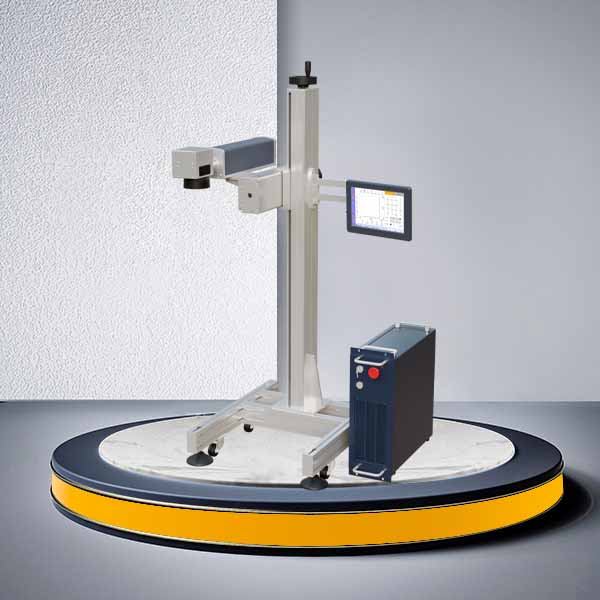
A high-speed flying laser marking machine—also known as an inline laser marking machine, conveyor laser marking system, or on-the-fly laser marker—is an advanced industrial laser system designed to mark products while they are in motion on a production line. Unlike traditional static (stationary) laser marking machines that require the workpiece to pause for marking, a flying laser marker synchronizes with the conveyor belt speed and marks continuously without interrupting the manufacturing flow.
This "marking on the fly" (MOTF) capability is what sets flying laser systems apart. The laser beam, guided by a high-speed galvanometer scanner, tracks the movement of each product and engraves text, serial numbers, barcodes, QR codes, logos, expiration dates, and batch numbers with micron-level precision—all at production line speeds.
Key Distinction
"Flying" does not refer to the laser itself moving. It refers to the workpiece moving (flying) past the laser head on a conveyor, while the laser dynamically compensates for that motion in real time to produce a clear, accurate mark.
Flying laser marking machines are typically equipped with one of three laser sources, each suited to different materials and applications:
Fiber lasers (1064 nm) — The most common type, ideal for metals (stainless steel, aluminum, brass, titanium) and hard plastics. Offers excellent beam quality and long service life (100,000+ hours).
UV lasers (355 nm) — Best for heat-sensitive materials like certain plastics, glass, and ceramics, where minimal thermal damage (the "cold marking" effect) is critical.
CO2 lasers (10.6 µm) — Suited for non-metallic materials such as paper, cardboard, wood, glass, and flexible packaging films.
How Does It Work?
The working principle of a high-speed flying laser marking machine relies on the precise synchronization of several key components:
1. Laser Source and Galvanometer Scanner
The fiber (or UV/CO2) laser source generates a concentrated beam of light. This beam is directed into a galvanometer scanner—a pair of fast-rotating mirrors (X and Y axes) that steer the laser beam across the marking field. A field lens (F-theta lens) then focuses the beam onto the product surface. The entire optical path is controlled by marking software (such as EZCAD), which translates digital designs into precise laser beam movements.
2. Encoder for Speed Synchronization
This is the heart of the "flying" functionality. An encoder—typically a rotary encoder mounted on the conveyor belt or beside the product path—continuously measures the belt's speed and feeds that data back to the control software in real time. The software then adjusts the laser beam's tracking speed to match the conveyor velocity, ensuring the mark is applied cleanly and legibly regardless of belt speed fluctuations. Some advanced systems also support variable-speed compensation through dedicated speed cards.
3. Sensor for Product Detection
A photoelectric sensor (or proximity sensor) detects when a product enters the marking zone. This triggers the laser to begin marking after a user-configurable delay. The sensor ensures each product is marked only once and in the correct position, even on high-speed lines with tightly packed products.
4. Vision System (Optional, for Advanced Models)
High-end flying laser systems may include machine vision cameras that detect the product's exact position, orientation, and rotation before marking. This enables precise marking on irregularly shaped objects and compensates for positioning variations on the conveyor.
In Simple Terms
Think of it as writing on a moving train with a pen that automatically matches the train's speed. The encoder tells the pen (laser) how fast to move, the sensor tells it when to start, and the galvanometer ensures the writing stays sharp and clear—no matter how fast the train goes.
Key Benefits and Advantages
High-speed flying laser marking machines offer compelling advantages over traditional marking methods such as inkjet printing, dot-peen marking, and label application. Here is why more manufacturers are switching:
1. Non-Stop Production Line Operation
The single biggest advantage is continuous marking without stopping the conveyor. Traditional static laser markers require each product to pause for engraving, creating a bottleneck. Flying laser systems mark on the fly, enabling throughput increases of up to 3× compared to static systems. This is critical for high-volume industries like food packaging, pharmaceuticals, and beverage production.
2. Zero Consumables — Massive Cost Savings
Unlike inkjet printers that require continuous ink and solvent refills, or label systems that consume adhesive labels, laser marking is a non-contact, consumable-free process. There is no ink, no solvent, no label stock, and no nozzle to clog. Manufacturers report consumable cost reductions of up to 90% compared to inkjet systems. The only "consumable" is electricity.
3. Permanent, Tamper-Proof Marks
Laser marks are engraved directly into the material surface, making them permanent and resistant to fading, abrasion, chemicals, and solvents. This is essential for product traceability, anti-counterfeiting, and regulatory compliance. Unlike ink that can wash off or labels that can peel, laser marks endure the full product lifecycle.
4. Low Maintenance and Long Service Life
Fiber laser sources typically have a rated service life of 100,000+ hours (approximately 11 years of continuous 24/7 operation). Maintenance is minimal: cleaning optical lenses quarterly and ensuring proper ventilation. There are no moving parts in the laser source itself, and the Mean Time Between Failures (MTBF) often exceeds 50,000 hours. This translates to dramatically reduced downtime and maintenance costs.
5. Energy Efficiency
Modern fiber lasers consume approximately 70% less power than comparable CO2 laser systems. A typical 50W fiber flying laser marking machine draws only 500–800W of power, making it an energy-efficient choice for sustainability-conscious manufacturers.
6. Seamless Automation Integration
Flying laser systems are designed for plug-and-play integration with existing production infrastructure. They connect to PLCs, sensors, vision systems, and ERP/MES databases via standard interfaces (USB, Ethernet, RS232). This enables real-time variable data printing—such as unique serial numbers, QR codes linked to databases, or batch codes pulled from production management systems—without manual intervention.
7. Non-Contact, Contamination-Free Process
Because the laser never touches the product, there is zero risk of contamination or mechanical damage. This is especially important in food, pharmaceutical, and medical device manufacturing, where hygiene and product integrity are regulated by FDA, EU, and other global standards.
Industries and Applications
The versatility of high-speed flying laser marking machines makes them indispensable across a wide range of industries:
| Industry | Typical Applications | Recommended Laser Type |
|---|---|---|
| Food & Beverage | Production dates, expiration dates, batch numbers, QR codes on bottles, cans, flexible packaging, and cartons | CO2 or Fiber |
| Pharmaceutical | Serialization codes, regulatory compliance marks, anti-counterfeit QR codes on blister packs, vials, and medicine boxes | UV or Fiber |
| Electronics (3C) | PCB serial numbers, component identification, QR codes, decorative logos on phone housings and circuit boards | Fiber (MOPA) |
| Automotive | VIN codes, part numbers, safety certification marks, barcodes on metal housings, engine components, and plastic trims | Fiber |
| Cable & Wire | Color-coded markings, length markings, specification codes on extruded cables and wires | Fiber |
| Medical Devices | UDI (Unique Device Identification) codes, surgical instrument tracking, implant markings | UV or Fiber |
| Pipe & Tube | Manufacturer info, specification codes, production batch numbers on PVC, PPR, and metal pipes | CO2 or Fiber |
| Cosmetics & Daily Chemicals | Production dates, shelf life, batch numbers on bottles, tubes, and flexible packaging | CO2 or Fiber |
| Aerospace | Part traceability codes, material identification, certification marks on precision components | Fiber |
Technical Specifications to Consider
When evaluating a high-speed flying laser marking machine, the following specifications are critical to match your production requirements:
| Specification | Typical Range | What It Means |
|---|---|---|
| Laser Power | 20W – 100W (up to 200W for heavy applications) | Higher power enables deeper marks and faster speeds. 20–30W is sufficient for most surface marking; 50W+ for deeper engraving on metals. |
| Marking Speed | Up to 12,000 – 14,000 mm/s | The galvanometer scanning speed. Higher speed supports faster conveyor throughput. |
| Conveyor Line Speed | Up to 100–120 m/min | The maximum belt speed at which the machine can maintain marking quality. Ensure this exceeds your current and future line speed. |
| Marking Field | 70×70 mm to 300×300 mm | The maximum area the laser can mark in one pass. Larger fields accommodate bigger products or multiple items per pass. |
| Repetition Accuracy | ±0.002 mm to ±0.005 mm | The precision with which the machine can repeat the same mark. Critical for barcodes and QR codes that must be machine-readable. |
| Minimum Character Size | 0.01 mm – 0.15 mm | The smallest legible text the machine can produce. Important for micro-marking on small components. |
| Laser Wavelength | 1064 nm (Fiber), 355 nm (UV), 10.6 µm (CO2) | Determines material compatibility. Match the wavelength to your primary material type. |
| Beam Quality (M²) | < 1.5 – 2.0 | Lower is better. A value close to 1.0 means a near-perfect beam for finer, cleaner marks. |
| Power Consumption | 500W – 1200W | Energy draw during operation. Lower consumption reduces operating costs over time. |
| Cooling Method | Air-cooled (most models) or water-cooled (high-power) | Air cooling is simpler and maintenance-free; water cooling is needed for 100W+ systems. |
| Laser Source Lifespan | 100,000+ hours | Approximately 11 years of 24/7 operation. Look for reputable brands: IPG, Raycus, MAX, JPT. |
Flying vs. Static Laser Marking: What's the Difference?
Understanding the difference between flying and static laser marking is essential for choosing the right system. Here is a head-to-head comparison:
| Feature | Flying Laser Marking Machine | Static Laser Marking Machine |
|---|---|---|
| Workpiece Motion | Marks products in motion on a conveyor | Requires the product to be stationary |
| Production Throughput | High — up to 3× faster; no stop-start cycles | Lower — each product must pause for marking |
| Automation Level | Full inline automation; integrates with conveyor systems | Semi-automatic or manual loading required |
| Best For | High-volume, continuous production lines | Low-volume, precision parts; prototyping; deep engraving |
| Encoder/Sensor Required | Yes — essential for speed synchronization | No — workpiece is stationary |
| Cost | Higher initial investment, lower cost per mark | Lower initial investment, slower ROI for high-volume |
| Marking Depth | Moderate (optimized for speed) | Deeper (more time per mark) |
| Floor Space | Mounted over conveyor; minimal additional space | Requires dedicated marking station |
Bottom Line
If your production line runs continuously and you mark more than a few hundred products per hour, a flying laser marking machine will deliver a significantly better return on investment. If you produce low volumes of high-precision parts that require deep engraving, a static system may be more appropriate.
How to Choose the Right High-Speed Flying Laser Marking Machine
Selecting the right machine for your production line involves evaluating several factors beyond just specifications:
1. Match the Laser Type to Your Material
Your primary marking material determines the laser wavelength:
Metals and hard plastics → Fiber laser (1064 nm) is the standard choice.
Heat-sensitive plastics, glass, ceramics → UV laser (355 nm) for "cold marking" with minimal thermal impact.
Paper, cardboard, wood, packaging films → CO2 laser (10.6 µm) for non-metallic surfaces.
Multiple materials → Some manufacturers offer dual-laser systems combining fiber and CO2 sources.
2. Select the Right Power Level
20W–30W: Surface marking, date codes, QR codes on plastics and thin metals. Most cost-effective for light-duty applications.
50W: The sweet spot for most industrial applications. Handles metals and plastics with good depth and speed.
100W+: Deep engraving on hard metals, high-speed lines with demanding throughput requirements.
3. Verify Conveyor Speed Compatibility
Ensure the machine's maximum marking speed and encoder resolution can handle your production line speed—both current and projected future speed. Leaving a 20–30% headroom above your current line speed is recommended to accommodate future scaling.
4. Evaluate Software and Integration Capabilities
Look for systems that offer:
Support for variable data printing (serial numbers, batch codes from databases)
Compatibility with your ERP/MES system via API/SDK
Support for common file formats: AI, PLT, DXF, BMP, DWG, JPG
Multi-language software interface
Real-time production monitoring and quality reporting
5. Consider Safety Features
Industrial laser systems must comply with laser safety standards. Look for:
Full enclosure or protective housing (Class 1 laser product rating)
Emergency stop buttons at accessible locations
Light curtains or interlocked safety doors
Laser safety shutters
Compliance with EN 60825, FDA 21 CFR 1040.10, and IEC 60825-1 standards
6. Check the Laser Source Brand
The laser source is the most critical and expensive component. Reputable brands include:
IPG Photonics (USA) — Premium quality, highest beam quality, longest lifespan.
Raycus (China) — Excellent value, widely used, reliable performance.
MAX Photonics (China) — Popular mid-range option with good stability.
JPT (China) — Known for MOPA fiber lasers with adjustable pulse parameters for color marking.
7. Factor in After-Sales Support
Look for manufacturers offering:
Minimum 2-year warranty on the laser source
Lifetime technical support
On-site installation and operator training
Readily available spare parts
Free software updates
Frequently Asked Questions
Q: How fast can a flying laser marking machine mark?
A: High-speed flying laser marking machines can achieve galvanometer scanning speeds of up to 14,000 mm/s and can keep up with conveyor belt speeds of 100–120 meters per minute. The actual marking speed depends on the complexity of the design, material type, and laser power.
Q: What materials can a flying laser marking machine mark?
A: Fiber laser models can mark all metals (stainless steel, carbon steel, aluminum, brass, copper, titanium) and many plastics (ABS, PVC, PC, PA). CO2 models handle paper, wood, glass, rubber, and packaging films. UV models are best for heat-sensitive plastics, glass, and ceramics. Combined, these cover over 99% of industrial marking materials. Highly reflective pure copper or gold may require special preprocessing or MOPA fiber lasers.
Q: How long does the laser source last?
A: Fiber laser sources typically have a rated lifespan of 100,000+ hours—approximately 11 years of continuous 24/7 operation. During this period, the laser source is essentially maintenance-free, with no consumables required. Most manufacturers offer a 2-year warranty, with some extending to 3 years.
Q: What is the difference between flying laser marking and inkjet printing?
A: Flying laser marking uses a non-contact laser beam to permanently engrave the material surface, requiring no consumables (ink, solvents). Inkjet printing applies liquid ink that can fade, smear, or be washed off. Laser marks are permanent, resistant to chemicals and abrasion, and comply with regulatory traceability requirements. While inkjet has a lower upfront cost, laser marking offers a significantly lower cost per mark over the equipment's lifetime.
Q: Can the machine handle variable-speed production lines?
A: Yes. The encoder continuously monitors belt speed and feeds data to the control software in real time. Advanced systems with dedicated speed-compensation cards can handle variable-speed lines while maintaining marking accuracy. However, for best results, a stable, consistent conveyor speed is recommended.
Q: Can the machine integrate with my existing ERP or MES system?
A: Most modern flying laser marking systems provide SDKs, APIs, or database connectivity options that allow seamless integration with ERP/MES systems. This enables real-time variable data printing—such as pulling unique serial numbers, batch codes, or QR codes from your production database—without manual data entry.
Q: What maintenance is required?
A: Maintenance is minimal. Recommended tasks include: cleaning the optical lenses and scanning mirrors quarterly, checking the alignment of the laser head and conveyor sensors periodically, ensuring proper ventilation, and keeping the software and firmware updated. There are no consumables to replace and no nozzles to clean or unclog (as with inkjet systems).
Q: Can it mark curved or uneven surfaces?
A: Yes. With adjustable focus systems and 3D dynamic focusing capabilities, flying laser markers can compensate for surface height variations of up to 50 mm, ensuring uniform mark quality on curved bottles, cylindrical pipes, and uneven surfaces.
Q: How much does a high-speed flying laser marking machine cost?
A: Pricing varies based on laser type, power, and features. Entry-level 20W fiber models typically start around $3,000–$5,000. Mid-range 50W systems range from $5,000–$10,000. High-end 100W+ systems with vision positioning and advanced integration can range from $10,000–$25,000+. UV laser systems are generally 50–100% more expensive than fiber equivalents.
Conclusion
The high-speed flying laser marking machine represents a transformative technology for manufacturers seeking to optimize production efficiency, ensure product traceability, and reduce long-term operating costs. By enabling permanent, high-precision marking on products in motion—without stopping the production line—these systems deliver a compelling return on investment for high-volume operations across food and beverage, pharmaceuticals, electronics, automotive, and beyond.
The key advantages are clear: zero consumables, minimal maintenance, 100,000+ hour laser lifespan, and seamless integration with automated production infrastructure. When compared to traditional inkjet or static laser marking, the flying laser system's ability to maintain throughput without sacrificing mark quality makes it the clear choice for modern smart manufacturing.
When selecting a machine, carefully evaluate your material type, production volume, line speed, integration requirements, and safety compliance needs. By choosing the right laser source, power level, and software ecosystem, you can build a marking solution that scales with your business for years to come.
209
0
0
All Comments (0)
Previous: None
Next: What Are the Advantages of Using a Handheld Laser Marking Machine?
If you are interested in sending in a Guest Blogger Submission,welcome to write for us!

Comments